From every conversation
to the context your team needs.
The channel may change. The customer need, previous conversations, and next action should stay with the person responsible.
AI Sales System
Context, preparation, and follow-up
- Customer need
- What the customer is looking for
- Background
- What has been discussed
- Next action
- What to review next
Your team
Validates the terms and decides how to proceed.
Inquiry
Brings together the customer need, company, and reason for reaching out.
Qualification
Reviews fit and identifies what still needs to be asked or verified.
Follow-up
Prepares the resource, channel, and an agreed next action.
Person responsible
Receives the context, reviews the proposed action, and continues with the customer.
Every conversation needs something different.
To review
- The customer raises a budget constraint.
- Missing information: initial priority
Prepared work
- Separate the initial need from what can be expanded later.
- Resource: scope for review
Human owner
- Confirms the terms with their team before responding.
- Decision: next conversation
One objection. A workable decision.
A first phase that makes sense
Sales conversation
What AI prepares to address the budget concern
Context gathered
Brings together the customer need, stated budget, and the terms of your offering.
Prepared proposal
Prepares an initial scope proposal, its questions, and a demonstration outline.
Human validation
The salesperson confirms feasibility and terms before presenting it.
What to review in this case
Resolve the question before asking for a decision.

📲WhatsApp · A demo focused on the requirement
Sales conversation
Context for this example
Your next opportunity could be an existing customer.
📲WhatsApp · A changing need
Sales conversation
Context for this example
Seven agents.
One process led by your team.
Meet the agents
ORION
From opportunity to action plan.
See what ORION prepares
NEXO
The right offering for the need at hand.
See what NEXO prepares
VÉRTICE
Research that changes the conversation.
See what VÉRTICE prepares
PRISMA
A useful resource to restart the conversation.
See what PRISMA prepares
PULSO
Keeps the workflow connected.
See what PULSO prepares
TRAMA
Turns a response into a next action.
See what TRAMA prepares
LUNA
Voice conversations leave context, too.
See what LUNA prepares
How the seven agents share context
Explore what you can implement.
The system at a glance.
Components described on this page.












Explore roles, prospecting, and sales management
One operation. A perspective for every role.
Choose your role to see what you can evaluate when implementing the AI Sales System.
Bring strategy into daily operations.
Evaluate which sales process needs organizing, which components you need, and how they will be implemented with your team.
- A scope tied to your offering and the way you sell.
- Owners and criteria for reviewing the work.
- Implementation, training, and support.
Decide where to act and why.
Bring together context on opportunities and blockers to guide your team toward a concrete next action.
- Opportunities and background available for review.
- Blockers, requirements, and follow-ups that need attention.
- Actions with a named owner and review criteria.
Coordinate the work that moves an opportunity forward.
Organize preparation and follow-up so advisors share context and sales criteria.
- What each agent prepares and what the advisor verifies.
- Resources for proposals, objections, and conversations.
- Follow-up configured around the agreed process.
Enter the conversation with the work prepared.
Use the available context and the resources the agents prepare to review how to move each opportunity forward.
- Background on the company, proposal, and conversation.
- Questions and talking points you can review before using.
- A next action connected to what the customer needs.
Information should help you decide.
Review where to act and what evidence supports it. These examples illustrate the analysis; they are not customer results.
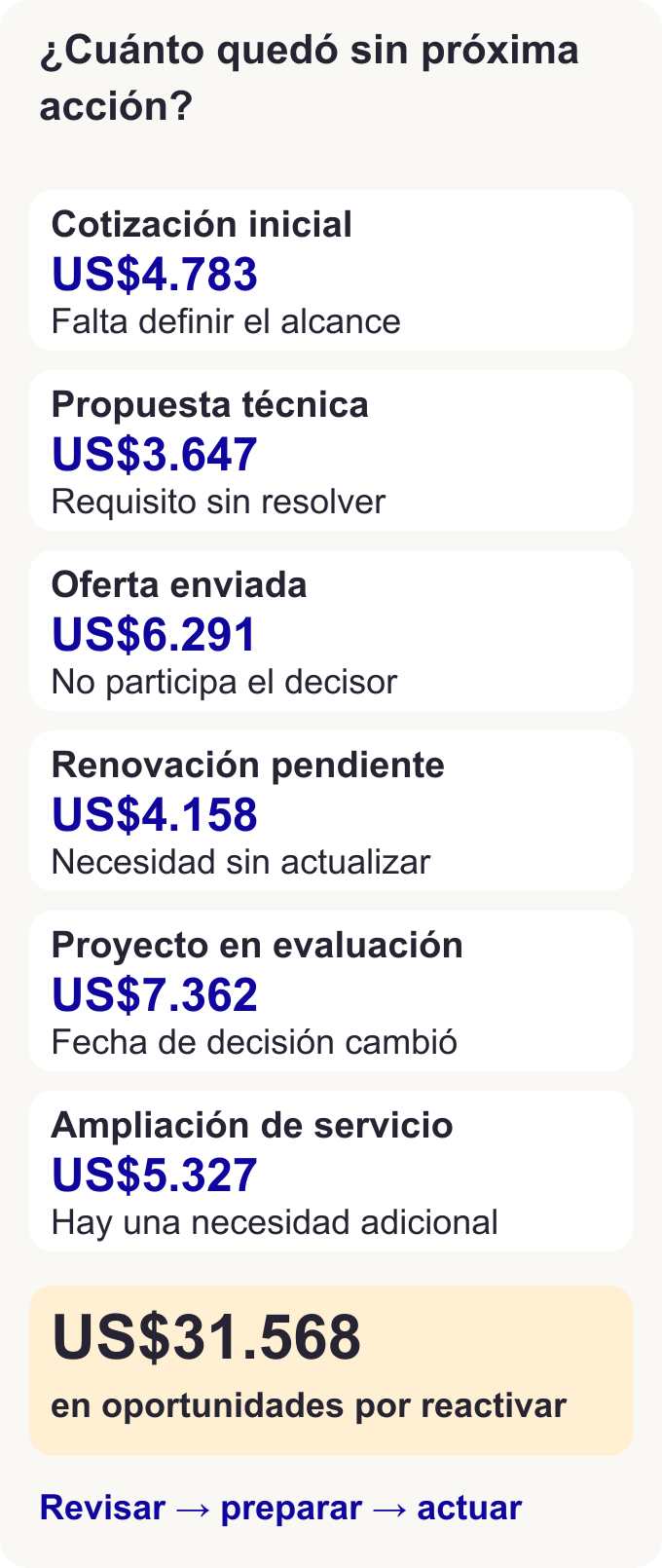
Six opportunities. Six next steps.
Six stories. Six different next actions.
The value shows what to review; the blocker determines what the team should prepare before restarting the conversation.
Initial quote
US$4,783Scope still needs to be defined
Technical proposal
US$3,647Unresolved requirement
Offer sent
US$6,291Decision-maker not involved
Pending renewal
US$4,158Customer need not updated
Project under evaluation
US$7,362Decision date changed
Service expansion
US$5,327An additional need has emerged
Review context → prepare the resource → assign a next action.
View the original chart Illustrative reference
amounts in US$
What makes these opportunities different
Your pipeline, turned into next actions.
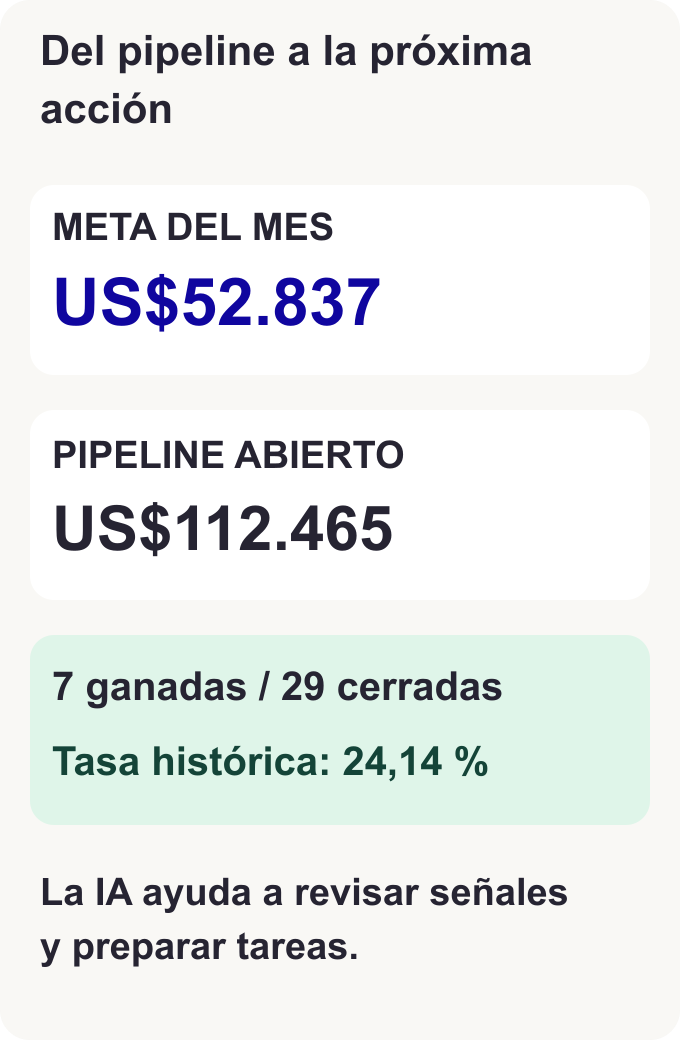
From pipeline to a decision your team can act on.
Read the figures together to distinguish volume, evidence, and tasks. They are not live data.
View the original pipeline chart Illustrative example
amounts in US$
View the original forecast chart Illustrative example
amounts in US$
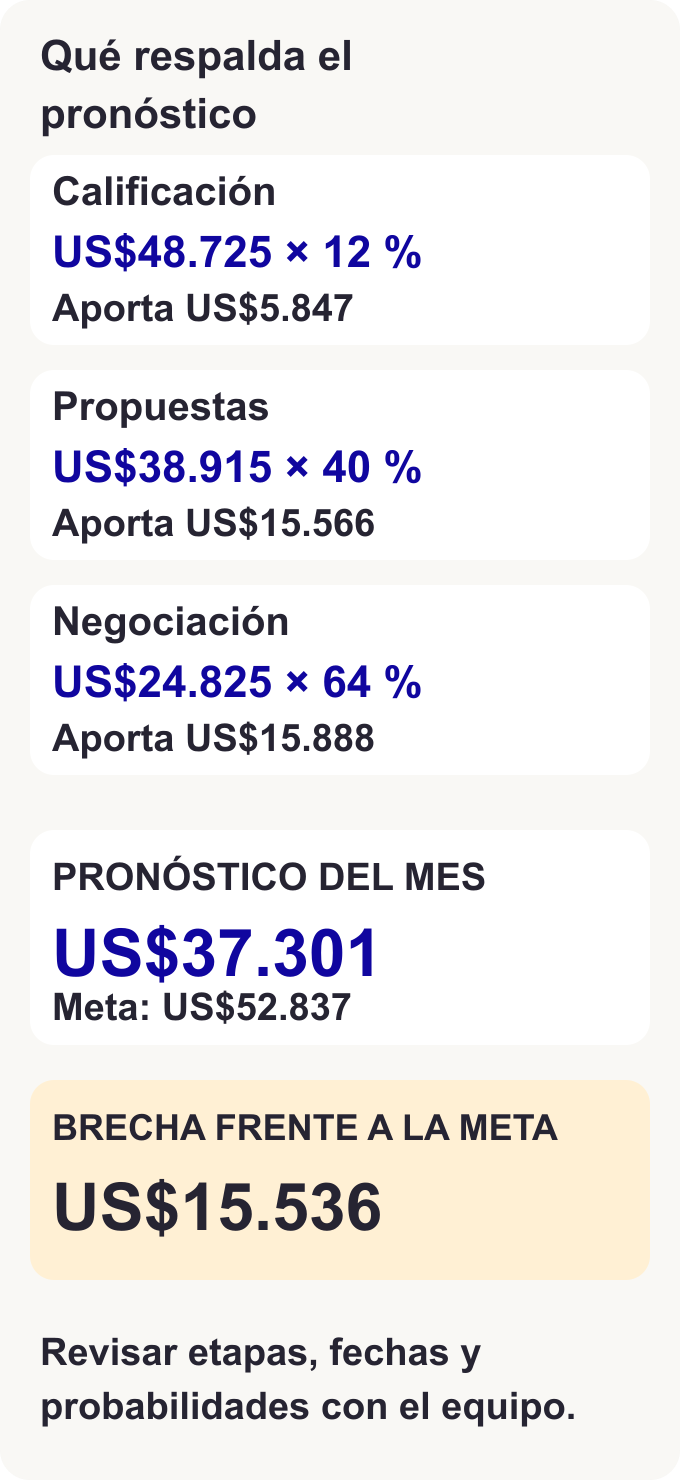
How the forecast becomes tasks
- Review each opportunity's date, stage, agreed probability, and background.
- Identify missing information, blockers, and owners.
- Prepare the sales resource the next conversation needs.
- Record the response and progress to review the forecast.
How to use this analysis with your team
Expand your market with context.
How to explore new channels and markets
What gets prepared and who makes the decision.
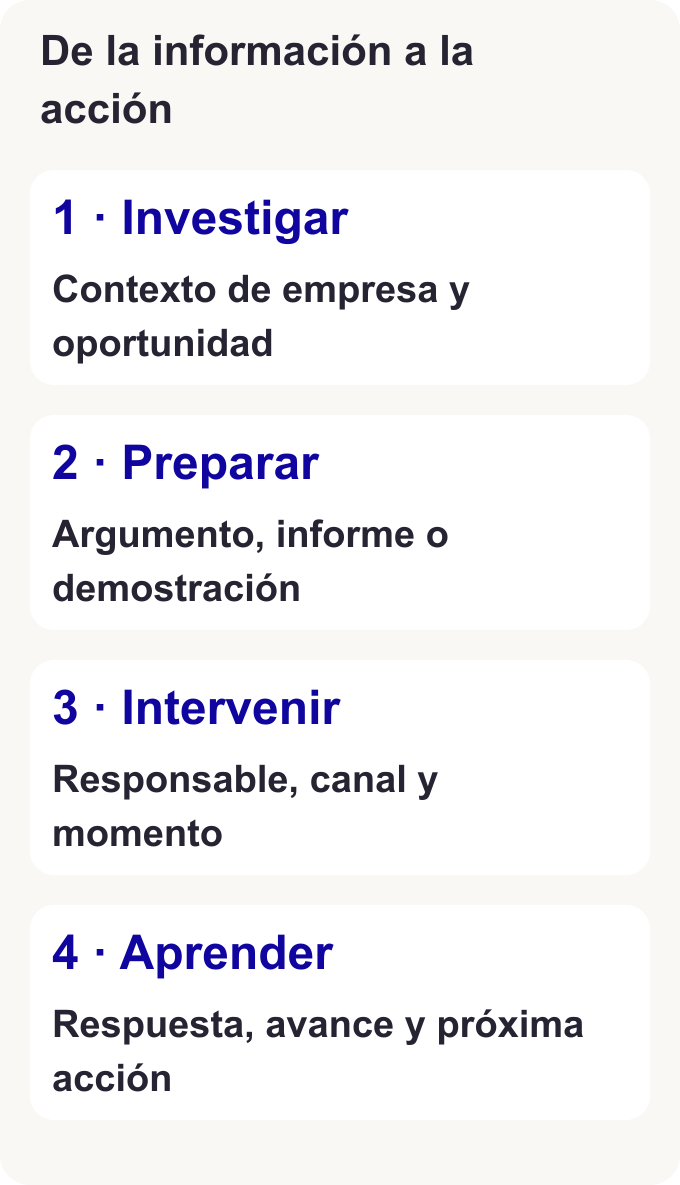
Information becomes a next action.
The system organizes the work; your team keeps control of sales decisions.
Research
Company and opportunity context.
Prepare
Talking points, report, or demonstration.
Act
Owner, channel, and timing.
Learn
Response, progress, and next action.
View the original workflow diagram Illustrative reference